
 Login / Signup
 Wishlist

Can You Install a TV Bracket on a False Wall or Partition in Singapore
December 19, 2025
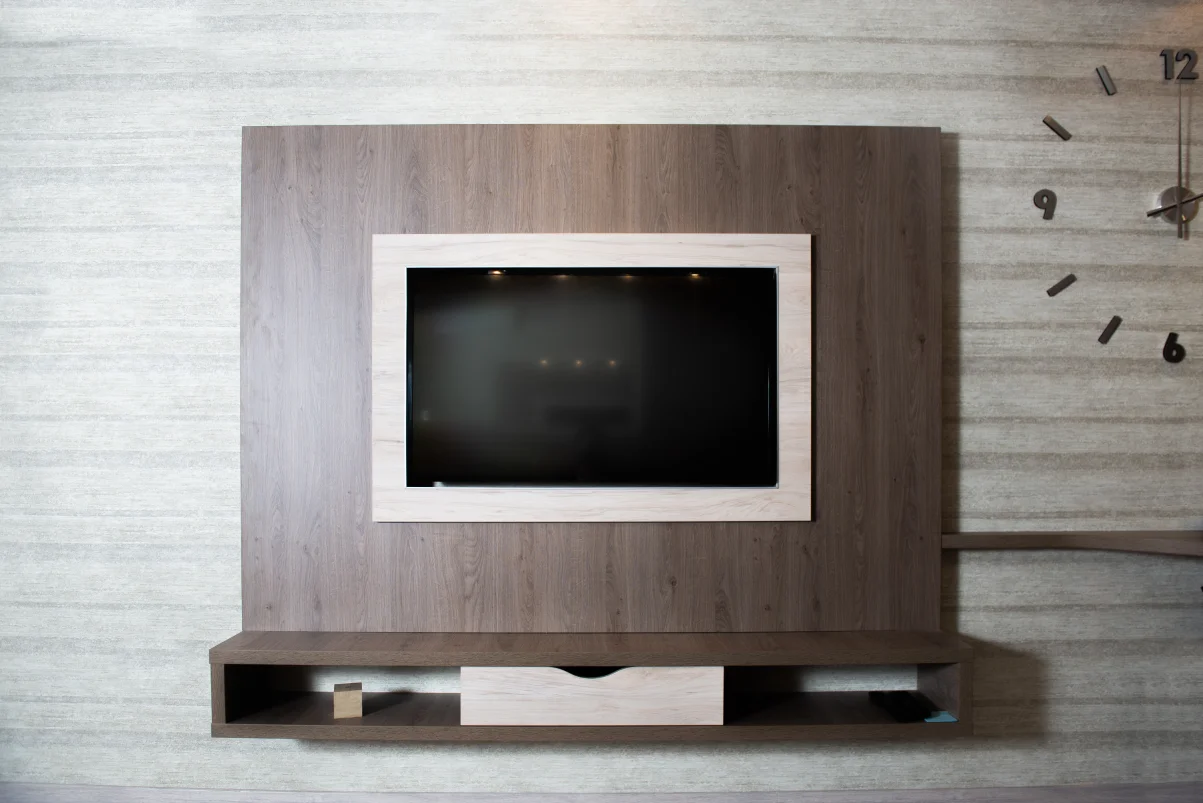
Mounting a television on a false wall or partition is becoming increasingly common in Singapore homes, especially as more homeowners choose feature walls made of drywall, laminated panels, or lightweight partitions for a clean, modern look. As homeowners search for ways to install a TV bracket safely, many wonder whether their false wall can support the weight without cracking or collapsing. Working with Tiger Mount often becomes part of the conversation, not for sales, but because our installers understand the nuances of Singapore’s wall materials, load capacities, and proper reinforcement methods. Before you install a TV bracket, it is important to understand the structural limitations of partitions, the risk factors involved, and the safe methods used by professionals.
This article explores whether you can safely install a TV bracket on a false wall or partition in Singapore, what determines the load capacity, how reinforcement works, and what homeowners should consider before mounting their televisions. It provides research backed, non generic information so readers can make fully informed decisions.
Key Takeaways
- You can install a TV bracket on a false wall in Singapore but only if the wall structure is assessed for load capacity and reinforced when needed.
- Different false wall materials have different strengths and weaknesses so understanding whether yours uses drywall, plywood backing, metal studs, or cement board is essential.
- Installing a TV bracket incorrectly may lead to cracks, sagging, or complete wall failure so proper anchoring and reinforcements must be used.
- Professional installers use tools such as stud finders, backing boards, load tested anchors, and customised mounting plates to optimise weight distribution and safety.
- Homeowners should consider future cable management, TV size and weight, and ongoing maintenance so their installation remains safe and stable for years
Common Types of False Wall

False walls are everywhere in Singapore homes because they create aesthetic backdrops for televisions, conceal wiring, and make renovation work more efficient. However, their internal structure is not standardised and this is what makes the decision to install a TV bracket more complex.
Drywall or Gypsum Board
These lightweight panels are typically secured to metal or timber studs, making them one of the most common false wall materials used in BTO flats, condominiums, and renovated HDB units. Their internal structure is hollow, which means the board itself cannot carry much weight even though the studs behind it may be able to.
When homeowners choose to install a TV bracket on drywall, the load must be transferred to these studs using proper anchors or mounting techniques. Without stud mounting or reinforcement, the screws may eventually pull through the drywall, causing cracks or sudden failure.
Because drywall is easy to cut and modify, it is also commonly chosen for concealing electrical wiring and HDMI cables, but the convenience comes with the responsibility of ensuring proper load distribution and safety.
Laminated Feature Walls
Laminated feature walls are popular in Singapore for creating a clean and modern aesthetic, often serving as the focal point of the living room. These walls are usually constructed using a plywood base fixed to timber battens or metal studs before being finished with a laminate surface.
While plywood generally offers a stronger mounting surface than gypsum board, its actual strength varies depending on thickness, carpentry workmanship, and whether the plywood is continuous or patchworked.
Some walls include dedicated plywood backings for TV mounting, but others may rely on thinner sheets that are not intended for heavy loads. When installing a TV bracket, professionals need to confirm the plywood thickness and anchoring quality to ensure the bracket can support the weight over time. Poorly supported laminated walls may look sturdy but can still fail if not properly reinforced.
Cement Board or Fibre Reinforced Panels
Cement board and fibre reinforced panels offer significantly greater strength and stability compared to gypsum, making them suitable for feature walls that need to support moderate to heavy loads. These boards are dense, resistant to moisture, and less prone to warping, which is why they are often selected for premium design projects or areas near windows where humidity is higher. However, their hardness also means installation requires specialised drilling tools and heavy duty anchors.
Even though these panels can hold more weight, their performance still depends on the supporting frame behind them. A TV bracket installation may still require additional reinforcement if the backing structure was not designed to bear the load of a large television.
Composite Partition Systems
Composite partitions, including aerated autoclaved concrete blocks (AAC), foam core panels, and modular wall systems, provide better weight distribution and stronger structural integrity than hollow drywall. Their dense internal composition allows them to hold heavier brackets and televisions with the right anchoring hardware. However, these systems vary significantly depending on the manufacturer and installation method, so assumptions about load capacity can be risky.
Even strong materials perform poorly if they are thin, improperly installed, or lacking sufficient internal support. This is why installers still conduct careful assessment and testing before mounting a TV bracket. Composite partitions are reliable when reinforced correctly, but their performance must always be evaluated case by case.
Why Installing a TV Bracket on a False Wall Requires Special Consideration

False walls are not designed to be load bearing. Their internal structure determines whether they can support additional weight such as a 55 inch or 65 inch TV. Adding a TV bracket involves downward force, torque from arm extension brackets, and vibration from reopening or adjusting the TV’s angle.
- Risk of Wall Collapse: If the TV is mounted only on weak drywall without reinforcement, the screws may eventually tear through the board.
- Cracks and Dents: False walls flex under pressure. Over time, this may lead to noticeable cracks or sagging.
- TV Misalignment: If studs are not aligned or the bracket is anchored incorrectly, the TV may tilt or shift.
- Anchor Failure: Incorrect anchors such as plastic wall plugs can loosen or fail under heavy load.
To avoid these risks, installers must assess the wall structure before mounting. This is why a professional who understands how Singapore partitions are constructed is often engaged.
How Professionals Assess Your Partition Before Installation
Installers do not rely on guesswork. They follow a structured and safe assessment process.
Step 1: Identifying Studs
Metal or timber studs are the main support. Installers use stud finders to locate them. Mounting directly onto studs significantly increases load capacity.
Step 2: Checking for Plywood Backing
Some feature walls include hidden plywood backing specifically meant for TV mounting. If present, installation becomes safer.
Step 3: Measuring TV Weight and Bracket Type
A 55 inch TV can weigh 12 to 20 kg while larger OLED models can exceed 25 kg. A full motion bracket adds additional strain due to leverage.
Step 4: Selecting Proper Anchors
These may include toggle bolts, heavy duty wall anchors, cavity anchors, or custom reinforcement plates.
Step 5: Reinforcement Planning
If the false wall is weak, reinforcement becomes mandatory before installation.
Typical False Wall Materials and Their Mounting Feasibility in Singapore
The following table compares common materials, strengths, risks, and recommended reinforcement methods.
|
False Wall Material |
Typical Thickness |
Strength Level |
Mounting Feasibility |
Recommended Reinforcement |
|
Gypsum drywall |
9 to 13 mm |
Low |
Possible only with stud mounting or heavy duty anchors |
Metal stud mounting, cavity toggles, plywood board |
|
Laminated plywood feature wall |
12 to 18 mm |
Medium to high |
Usually safe depending on plywood quality |
Additional plywood backing if thin |
|
Cement board |
12 mm |
Medium |
Can hold moderate loads |
Use heavy duty anchors |
|
Fibre reinforced panel |
12 to 15 mm |
High |
Good for mounting |
Reinforcement optional but recommended |
|
Hollow partition (metal stud frame) |
Varies |
Low to medium |
Possible only with studs or reinforcement |
Backing board behind the wall |
|
Composite or AAC panels |
High |
High |
Usually safe |
Load spreader plate |
When You Should Not Install a TV Bracket on a False Wall
Even with proper reinforcement and professional assessment, there are certain situations where mounting a TV bracket on a false wall becomes unsafe or structurally unsound. False walls in Singapore vary widely in construction quality, and some are never intended to bear weight. Understanding these limitations helps prevent long term damage, costly repairs, or safety hazards.
Extremely Thin Panels
Panels below 9 mm thickness are not suitable for supporting heavy loads because they lack structural density. When anchors are placed into material this thin, the board may crack, compress, or tear away over time, especially under the weight of a full motion bracket or a large television.
Even high quality anchors rely on having enough material to grip, so extremely thin panels provide no stable foundation. If the false wall was built primarily for decorative purposes, it is common for carpenters to use thinner boards to save space or material cost. In these cases, the safest option is to mount the bracket onto a structural wall instead.
Unsupported Hollow Sections
Some false walls contain hollow spaces where studs are widely spaced or placed only around the wall perimeter. When studs are too far apart, the TV bracket cannot be secured at enough points to distribute weight safely. Attempting to mount a bracket in unsupported areas may cause the wallboard to bow, tilt, or detach completely.
This risk is even greater when using full motion brackets that exert outward force. Without a stud or backing board directly behind the mounting position, the installation becomes structurally unstable. Reinforcement may be possible in some cases, but if the hollow section is too large, it is not advisable to proceed.
Water Damaged Partitions
Moisture is particularly damaging to gypsum, plywood, and fibre based panels. When a wall has been exposed to leaks, high humidity, or condensation, the internal core can weaken or degrade. Gypsum becomes soft and crumbly, plywood may delaminate, and adhesive layers may lose bonding strength. Even if the surface appears dry, internal moisture damage reduces the load bearing capacity drastically.
Installing a TV bracket on such a wall risks long term failure because the anchors may pull out as the material continues to deteriorate. A moisture damaged wall should first be repaired or replaced before any mounting is considered.
Carpentry Not Designed for Load
Some feature walls are constructed purely for aesthetic purposes, designed to hide cables, provide a backdrop, or incorporate lighting elements. These decorative partitions may be made from thin plywood, MDF, PVC boards, or mixed materials that look solid but lack meaningful structural support.
In many cases, the carpenter does not include a continuous backing panel or internal bracing because the wall was never meant to bear weight. Attempting to mount a TV bracket onto such a surface places stress on joints, adhesives, and unsupported sections, all of which can fail unexpectedly. Without dedicated load bearing design, these walls should not be used for mounting.
Irregular or Compromised Internal Structures
Some partitions contain cutouts for electrical conduits, pipes, or niche shelving that limit available mounting points. If the internal layout interferes with stud placement or plywood backing, the bracket cannot be safely installed. In older flats or heavily renovated units, false walls may also be patched or altered over time, creating inconsistent support levels across the surface. If the structure is irregular or compromised, even reinforcement may not fully mitigate the risks.
Cable Management and Aesthetic Considerations for Singapore Homes

Homeowners often build false walls to hide cables, so planning cable routes before installation is important. The installer must determine whether cables can be run behind the wall, whether conduit space is available, or whether additional drilling is required.
- Concealed Wiring: If the wall has internal conduit space, cables can be hidden.
- Surface Trunking: Used when cutting the wall is not possible.
- Power Outlet Relocation: Some homes require new outlets behind the TV for safety and convenience.
Safety Standards and Load Testing
In Singapore, installation practices follow general renovation and safety guidelines, even though there is no dedicated regulation for TV bracket mounting. Professional installers rely on load tested brackets, certified anchors, and proper spacing techniques to ensure the installation is stable and safe.
Proper load assessment is considered best practice because false walls vary widely in strength. After the installation, installers typically apply controlled force to the bracket to confirm that it is secure and capable of supporting the TV over time.
Below is a quick guide that helps homeowners understand the load bearing requirements of false walls in Singapore:
- Most TV brackets are rated to carry 25 to 60 kg, but the wall must also be structurally capable of supporting this weight.
- Drywall or gypsum panels alone hold only 3 to 5 kg, which is insufficient for television mounting without studs or reinforcement.
- Mounting into metal or timber studs increases load capacity to 20 to 40 kg, depending on spacing and anchor strength.
- Feature walls with 12 to 18 mm plywood backing typically support 30 to 50 kg, especially when the plywood is continuous.
- Full motion brackets create 2 to 3 times more torque than fixed brackets, meaning the required wall strength must be higher.
- Heavy duty anchors can support 10 to 20 kg per anchor in strong material, but far less in thin or weakened panels.
- A safe installation generally requires at least 4 strong mounting points, each bearing 8 to 12 kg.
- Walls that flex, sound hollow, or feel unstable at the mounting zone should be reinforced before installation.
- Panels thinner than 9 mm, or any wall that has suffered moisture damage, should not be used for mounting without structural repair.
This combined approach of following safety standards, choosing load tested materials, and verifying the wall’s strength helps ensure that TV installations in Singapore homes remain secure for years.
Optimising Your Installation for Long Term Safety
Once the installation is complete, homeowners should take steps to maintain the stability and safety of their mounted television. A TV bracket is designed to last for years, but environmental factors, wall material changes, and general wear can affect long term performance.
Regular Checks
Inspect the bracket at least once a year to ensure that no screws have loosened and no components are showing signs of stress. For full motion brackets, check the arm joints and pivot points, as these experience the most movement and torque.
If you notice slight tilting, unusual noise when adjusting the TV, or hairline cracks forming on the wall surface, these may be early indicators that reinforcement or tightening is needed. Periodic checks are especially important in older HDB flats or homes with partitions that naturally settle over time.
Avoid Overloading
TV brackets are designed with specific weight limits, so adding extra devices to the bracket may compromise stability. Avoid hanging soundbars, gaming consoles, decorative shelves, or additional mounts directly onto the TV bracket unless the model includes a built in accessory support.
Overloading adds unexpected downward force and torque that can stress the anchors and weaken the false wall. If you need to mount a soundbar, use a separate bracket or place it on a console instead.
Protecting Against Humidity
Singapore’s humid environment can gradually weaken plywood, laminate, or gypsum based partitions, especially in areas near windows or air conditioning units. Over time, moisture can cause warping, softening, or internal delamination, which reduces the wall’s load bearing capacity. To maintain stability, ensure the area behind the TV has proper ventilation and avoid blocking airflow entirely. Using a dehumidifier in rooms prone to dampness can help preserve the structural integrity of the partition.
Monitor for Wall Movement or Settlement
False walls, especially those built over existing surfaces or onto uneven floors, may settle or shift slightly over the years. If you notice the wall becoming uneven, gaps forming at the skirting line, or the TV appearing slightly misaligned, this may indicate wall movement. Early detection allows for reinforcement before the structure weakens further.
Consider Updating the Bracket When Upgrading Your TV
Modern televisions vary significantly in weight and dimensions. If you replace your TV with a larger or heavier model, always reassess whether the existing bracket and wall can support it. A bracket suitable for a 43 inch TV may not be safe for a 65 inch set, especially if it uses a full motion arm. This reassessment helps avoid accidental overload.
Maintain Clean Cable Organisation
Messy or tightly stretched cables can place tension on the TV, pulling it slightly forward or downward over time. Proper cable management not only looks neater but also prevents unnecessary strain on the bracket and wall. Ensure cables have enough slack and are not rubbing against sharp edges inside or behind the wall.
Safe and Reliable Ways to Install TV Bracket Singapore Experts Recommend
Tiger Mount has become a familiar name among homeowners because many residents prefer having professionals assess their wall material, reinforcement needs, and bracket type before committing to installation. Whether you have a drywall partition, a laminated feature wall, or a cement board backing, understanding how the structure is built is the key to safe mounting.
If you plan to install a TV bracket in your Singapore home and want a safe, reliable assessment, you may contact Tiger Mount for professional onsite evaluation and mounting support.
Frequently Asked Questions
Can I mount a TV on an old feature wall that was not built for heavy loads?
Older feature walls may not have plywood or proper backing. A professional must assess and reinforce it before mounting.
Does the bracket type matter for false walls?
Yes. Full motion brackets create more torque and require stronger reinforcement compared to fixed brackets.
Will drilling into a false wall damage internal wiring
It can if the installer does not inspect the wall first. Professionals use tools to detect hidden wires or conduits.
Can wall mounts be removed later without damaging the wall
Removal is possible but small repair work is often needed, especially for hollow partitions.
How do I know if my partition has studs
A stud finder or minor exploratory drilling is used to locate studs. This cannot be determined visually.