
 Login / Signup
 Wishlist

Viewing Angles For The Best Full Motion TV Wall Mount 2026 In Singapore Homes
September 16, 2026
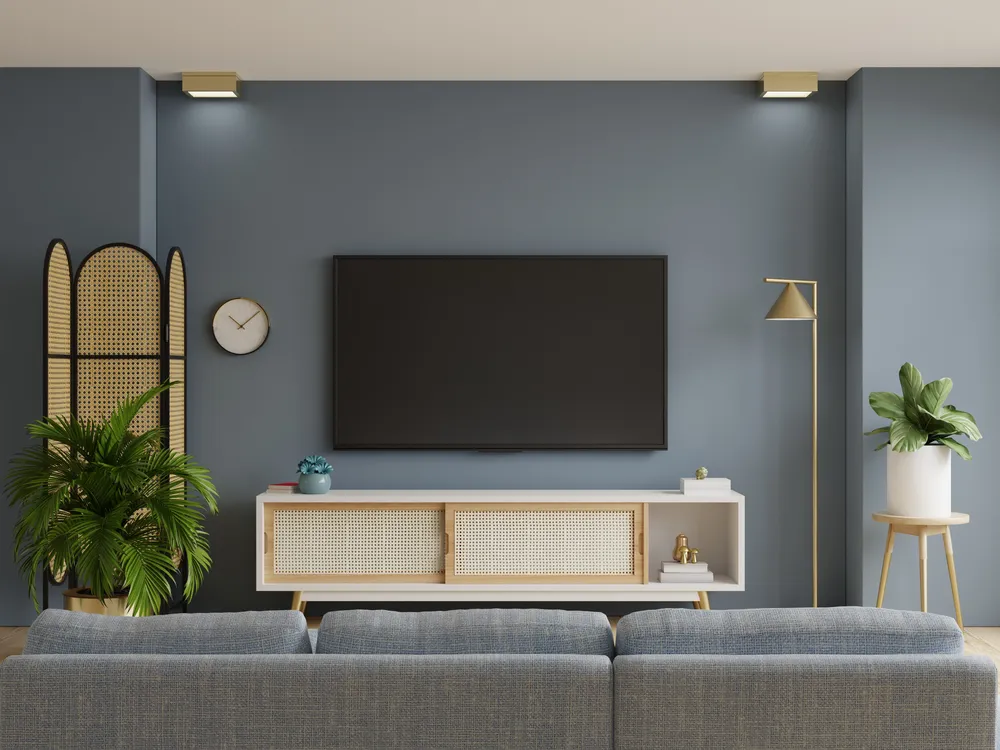
Drill a television too high or too far off-centre and the holes stay in the wall while neck strain returns every day. A comfortable setup starts with the seat, because viewing distance sets the useful screen size and seated eye level sets the screen-centre height.
Choosing the best full motion tv wall mount 2026 should therefore begin with measurements before bracket preference. In an HDB flat, BTO unit or condominium, a few centimetres of height or a small seating shift can change the viewing angle across the main sofa.
Measure the real seat-to-screen distance, locate the viewer’s eye height, then check what the wall can support. Those three checks give you a placement that works before a drill touches concrete or a partition wall.
The same method applies across living rooms, bedrooms and entertainment areas, with each room changing the useful height and movement. Before working through each room in detail, the checklist below captures the placement rules this guide follows.
Best mount by use case
Tiger Mount’s double arm range runs from the Q5 at SGD 59 to the H10 at SGD 309, with the X7 at SGD 89 and U80X at SGD 159 in between. All models support VESA patterns from 200×200 to 600×400 mm for televisions bought in Singapore, and all offer extension, swivel and tilt with built-in cable management.
|
Use case |
Mount class |
Typical rating |
TV Bracket option |
|
One sofa, fixed sightline, screen under 50 inches |
Single arm full motion |
15 to 45 kg |
Single arm range |
|
Bedroom viewing from bed and desk |
Double arm full motion, entry |
25 to 35 kg |
Q5, SGD 59 |
|
4-room living room with L-shaped sofa |
Double arm full motion, mid |
25 to 45 kg |
X7, SGD 89 |
|
Open-concept serving two viewing zones |
Double arm with wide swivel |
25 to 45 kg |
U80X, SGD 159 |
|
Screens above 65 inches, entertainment room |
Double arm full motion, large |
25 to 100 kg |
H10, SGD 309 |
Double arm mounts suit televisions from 32 to 100 inches and we recommend them for anything 50 inches and above. Prices shown are current listed prices and some models carry a promotional rate, so check the product page before ordering.
Key takeaways
- Measure viewing distance from the normal seated position to the screen, because usable distance is shorter than the room depth.
- Set the screen centre around 100 to 110 cm from the floor for most living room setups, then lower it for a low-profile sofa or floor seating.
- Aim for at least a 30-degree horizontal viewing angle when planning an immersive television position.
- Check every regular seat for off-axis viewing before deciding how much swivel range the TV bracket needs.
- Confirm the wall type and mounting position before choosing between a fixed, tilting or full-motion bracket.
Five checks before you buy a bracket
Work through these in order. Each one can rule a bracket out, so checking them in sequence saves returning a mount that was never going to fit.
1. TV model and VESA pattern
Find your television’s model number on the rear label, then measure the distance between the four mounting holes horizontally and vertically in millimetres. That measurement is the VESA pattern. Tiger Mount’s double arm models support 200×200 through to 600×400 mm, which covers most televisions sold in Singapore.
2. Actual screen mass
Use the weight from the manufacturer’s specification sheet rather than the shipping weight on the box, which includes packaging and the stand. Single arm mounts typically carry 15 to 45 kg and double arm mounts 25 to 70 kg, so a 30 kg television sits within both and the decision moves to screen size and movement instead.
3. Arm type against the rating
Match the arm type to the screen rather than to the budget. A single arm concentrates load on one pivot, while two articulating arms distribute weight more evenly and reduce stress on wall anchors. For televisions of 50 inches and above we recommend double arm regardless of whether the weight falls inside single arm range.
4. Reach and clearance
Measure how far the screen needs to travel from the wall to reach the angle you worked out from your seating. Then check what sits in the way, including a console, a corner return, a window frame or a door swing. A bracket that cannot extend far enough to clear an obstruction will not deliver the swivel angle it is rated for.
5. Wall type and installation plan
Identify the wall before ordering. Concrete takes a hammer drill, masonry bits and anchors rated for the load, and full-motion models supplied for concrete include suitable hardware. Partition and drywall construction, common in newer BTO bedrooms, needs hollow-wall anchors and remains subject to on-site assessment by our installer. Structural beams and columns must not be drilled, and your HDB floor plan identifies which walls are structural.
Two numbers decide the position
Two measurements do most of the work when planning a TV mount. Viewing distance sets the horizontal angle across the screen, and seated eye height sets the screen-centre height on the wall. Get those two right and everything else, from bracket type to tilt and swivel, becomes a smaller adjustment rather than a fix.
Viewing distance sets the horizontal angle
A comfortable horizontal viewing angle for most home setups sits between 30 and 40 degrees, depending on how immersive the viewer wants the picture to feel. A narrower angle around 20 to 25 degrees suits casual viewing, while a wider angle brings the eye closer to a cinema-style experience.
The geometry gives a repeatable way to turn those angles into distance. Viewing distance equals half the screen width divided by the tangent of half the viewing angle. For a 16:9 television, screen width is about 0.872 of the diagonal.
Take a 55-inch screen. Its approximate width is 55 × 2.54 cm × 0.872 = 121.8 cm, or 1.218 m. At 30 degrees, viewing distance = (1.218 m ÷ 2) ÷ tan(15°) = 0.609 ÷ 0.268 = 2.27 m, rounded to 2.3 m. (Verified: tan(15°) ≈ 0.2679, so 0.609 ÷ 0.2679 = 2.273 m, which rounds correctly to 2.3 m.)
At 36 degrees, viewing distance = (1.218 m ÷ 2) ÷ tan(18°) = 0.609 ÷ 0.325 = 1.87 m, rounded to 1.9 m.
These figures use the same formula and are rounded:
|
TV size |
30° viewing distance |
36° viewing distance |
|
43 inches |
1.8 m |
1.5 m |
|
50 inches |
2.1 m |
1.7 m |
|
55 inches |
2.3 m |
1.9 m |
|
65 inches |
2.7 m |
2.2 m |
Use the table after measuring from the normal viewing position. Room depth alone overstates viewing distance because the television console and sofa occupy part of that depth.
Screen-centre height follows the seat
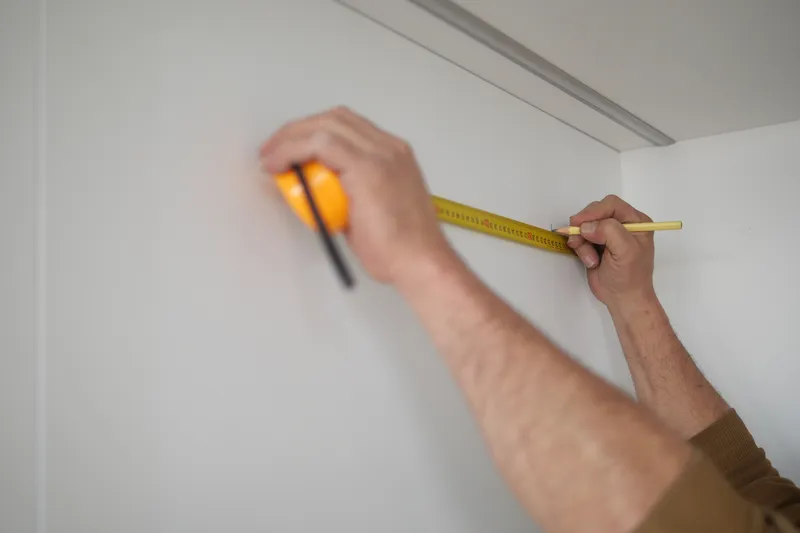
Tiger Mount places the screen centre at seated eye level, typically around 100 to 110 cm from the floor for most living room setups. Low-profile sofas and floor seating bring seated eye height down to roughly 90 to 97 cm, so the correct screen centre moves down with the viewer.
Measure eye height while sitting in the position used most often. Keep that figure as the baseline before marking the wall.
After drilling, tilt and swivel provide final alignment, so a TV bracket installation and adjustment process should begin from a measured screen-centre height.
Living-room placement changes with the HDB layout
A living-room plan should use the distance from the viewing position. Measure from the seat back towards the screen position because the console and sofa depth reduce the space available for viewing.
A 3-room HDB needs distance measured inside the furniture line
A 3-room HDB living room is often around 3.5 m wide by 3 m deep. That compact depth leaves less room once the sofa and television side of the room are accounted for. A measured distance around 2.1 m, for example, aligns closely with the rounded 30-degree distance for a 50-inch screen.
Keep the screen centre tied to seated eye level. A high wall can tempt the television upward, yet the usual living-room baseline remains around 100 to 110 cm at the screen centre for typical seating. Low seating shifts that baseline towards 90 to 97 cm.
A 4-room HDB gives more depth and more side seating
A 4-room HDB living room measures roughly 4.5 m wide by 3.5 to 4 m deep. A well-proportioned L-shaped sofa has a long arm around 200 to 220 cm and a shorter arm around 150 to 160 cm. That layout creates a main viewing seat plus seats that sit farther off-centre.
Start with the main seated distance, then check the shorter arm of the sofa for its TV viewing angle. The wider room can support a larger screen at the same target angle when the true seat-to-screen distance increases.
HDB ceilings commonly sit around 2.6 m, with some BTO units at 2.8 m, while seated eye level still sets the useful screen-centre height.
Open-concept or larger rooms need movement between viewing zones
Open-concept layouts often ask one television to serve the sofa and another viewing zone. Swivel range becomes useful when those positions sit on different lines to the screen. Some full-motion models offer up to 180 degrees of swivel, giving the bracket room to redirect the panel between zones.
For buyers comparing the best full motion tv wall mount 2026, screen size also affects the bracket choice. We recommend double arm mounts for televisions of 50 inches and above.
A double arm full motion TV wall mount uses two articulating arms to distribute weight more evenly and reduce stress on wall anchors, which suits larger screens in wider rooms.
Bedroom placement needs a different vertical angle
A bedroom changes the sightline because the viewer often watches from a lying position. The screen can sit higher than a living-room screen while still meeting the viewer’s natural line of sight. The useful reference remains the position of the viewer’s eyes, so mark the screen centre against the normal viewing posture before drilling.
Tilt usually matters more than swivel in this room. A person lying in bed often faces the television directly, while the screen sits above that viewer’s eye line. Tilting the panel towards the bed brings the screen face closer to the viewer’s sightline and reduces the need to hold the head at an awkward upward angle.
Swivel becomes useful when the television serves more than one position in the room. A full-motion bracket can also extend the screen before it turns, which gives more freedom where the required angle is larger.
For a lighter television, a single arm full motion TV wall mount typically supports 15 to 45 kg and can provide extension, swivel and tilt. Wall type deserves an early check in a BTO bedroom because partition construction is common in newer flats.
The screen position, bracket movement and wall construction should be assessed together before holes are marked.
Entertainment areas need the screen aimed at real seats
A multi-seat room exposes weak placement quickly. The centre seat may see a balanced picture while a side seat watches the panel from a steep off-axis angle. The best full motion tv wall mount 2026 needs enough movement to redirect the screen towards the seats that people use.
LCD and OLED panels change the swivel requirement
Panel type sets how much off-axis viewing the room can tolerate. OLED panels typically retain colour and contrast up to around 45 to 60 degrees off-axis, thanks to their self-emissive pixels. Standard LCD panels often begin losing fidelity beyond 30 degrees off-axis, although IPS LCD panels perform better than VA LCD panels in this regard. Exact performance varies by panel technology and manufacturer specification.
That difference changes the role of a swivel TV mount. A seat beyond 30 degrees off-centre sits outside the usable range of an LCD panel, so picture quality starts to fall before physical comfort becomes the main concern. Swivel therefore acts as an optical fix for an LCD panel because it can turn the screen face towards that seat.
OLED gives the room more tolerance. Its wider off-axis behaviour means a side seat can retain colour and contrast farther from the centre line. Swivel still improves comfort and alignment, especially when viewers move between seats, but the panel itself carries more of the off-axis load.
Check which panel you own before deciding how much movement you need. That one detail can change whether a fixed position works or whether a full-motion bracket earns its place on the wall.
Measure the side seats as well as the centre seat
A useful off-axis check starts with the seat position. A seat 1.5 m off centre at a 2.5 m viewing distance sits at about 31 degrees off-axis. That position crosses the 30-degree LCD threshold, so an LCD panel starts losing fidelity for whoever sits there while the centre seat still looks fine.supplied for picture fidelity, while seats farther to the side can cross it.
A TV wall mount selection for Singapore homes should account for swivel range as well as screen weight and size. Some full-motion models offer up to 180 degrees of swivel, which suits a room that serves more than one viewing zone.
The centre seat still needs a sensible horizontal viewing angle. SMPTE sets 30 degrees as its minimum recommendation, while THX recommends 36 degrees and identifies 40 degrees as ideal.
A good entertainment layout therefore checks two angles at once: the horizontal angle created by screen size and distance, and the off-axis angle created by the seat’s position across the room.
The wall decides the mount before bracket preference
Correct overbroad wall claims; distinguish structural elements, mounting surfaces and site-specific suitability without implying drilling into protected structural concrete is generally permitted.
Installation requires a hammer drill and masonry bits, with anchors rated for the load. Full-motion models supplied for concrete walls include suitable hardware, although the final position still depends on the wall and the television.
Partition and drywall construction is common in newer BTO flats, especially in bedrooms. These walls require hollow-wall anchors rated for the load, and load capacity varies with wall construction. Partition wall installations remain subject to on-site assessment by our installer, and we recommend customers confirm suitability with us before scheduling the installation.
Structural beams and columns must not be drilled. HDB renovation guidance identifies structural members such as reinforced concrete walls, columns, beams and slabs as protected building elements.
The HDB floor plan identifies structural and non-structural walls, so it provides a useful starting point before installation. A professional TV mount installation should begin with the wall type because extension and swivel place forces on the fixing points as the screen moves away from the wall.
VESA compatibility, screen weight and movement range then narrow the bracket choice after the mounting surface is established.
Match the mount type to the room and the screen
The right bracket follows from the room geometry, the wall and the television. Start with the main seat, confirm the screen-centre height, check off-axis seats, then match the required movement to the mounting surface.
Fixed mounts suit a settled viewing line
A fixed position can work when regular seats already sit within the chosen viewing angle and the screen centre can align with seated eye level. This approach depends on getting the drilling position right from the start because the screen position stays set after installation.
Tilting mounts solve a higher sightline
A tilting mount suits rooms where the screen sits above the viewer’s eye line. Bedrooms are the clearest example because a person lying in bed often benefits more from vertical tilt than horizontal swivel.
Single arm full motion suits lighter screens that need movement
Single arm full motion mounts typically support 15 to 45 kg. They extend, swivel and tilt, so they suit a lighter television where the room needs movement between viewing positions.
Confirm the screen weight, VESA compatibility and wall before choosing the bracket.
Double arm full motion suits larger screens
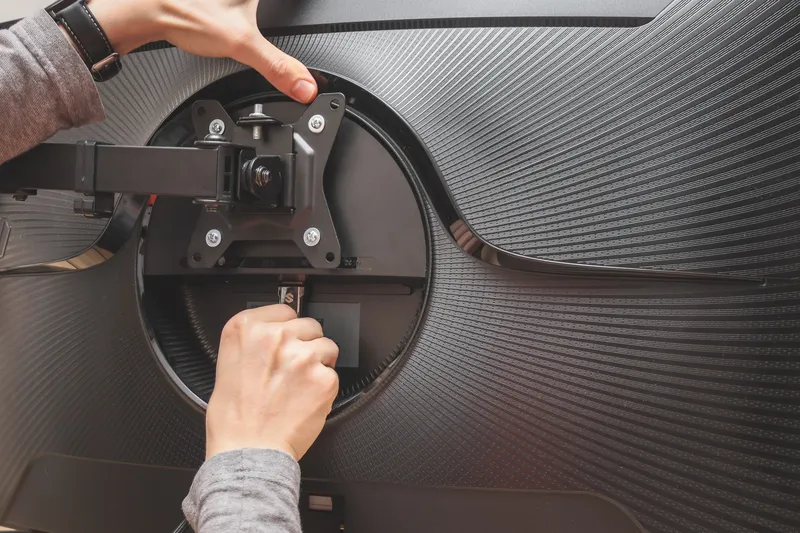
Double arm full motion mounts typically support 25 to 70 kg. Two articulating arms distribute weight more evenly and reduce stress on wall anchors.
Screens of 50 inches and above call for a double arm mount under the supplied recommendation, while some models also provide up to 180 degrees of swivel for more than one viewing zone.
Set the position before the drill comes out
A good TV position comes from the seat first. Measure the real viewing distance, set the screen centre from seated eye level, then check the side seats for off-axis viewing. Panel type changes how much swivel can help, especially once an LCD viewer moves beyond 30 degrees off-centre.
Wall construction then sets the safe mounting approach. Concrete and partition walls require different fixing methods, while screen weight and VESA compatibility narrow the bracket choice. Choosing the best full motion tv wall mount 2026 comes after those measurements.
Before installation, sit in your main seat and mark the measured screen-centre height on the wall with removable tape. If you would like an installer to confirm the measurements, wall type and bracket choice on-site, our team handles TV mounting, relocation and full-motion bracket installations across Singapore. Contact Tiger Mount to arrange a consultation before drilling.
Frequently Asked Questions
What viewing angle should I aim for in a living room?
SMPTE recommends a minimum horizontal viewing angle of 30 degrees. THX recommends 36 degrees, identifies 40 degrees as ideal and gives 26 degrees as its minimum acceptable angle.
How high should the centre of my TV be?
For most living-room setups, place the screen centre around 100 to 110 cm from the floor. Low-profile sofas and floor seating lower seated eye height to roughly 90 to 97 cm, so the screen centre should move down with the seat.
Does a bedroom TV need a full-motion mount?
A bedroom often benefits most from tilt because the viewer is lying down and the screen may sit higher. Swivel becomes more useful when the television serves more than one viewing position.
How much swivel range does an entertainment room need?
Check the panel type and the side-seat angles first. LCD panels begin losing fidelity beyond 30 degrees off-axis, while OLED panels hold colour and contrast to around 45 degrees, and some full-motion models offer up to 180 degrees of swivel.
Can a TV be mounted on a BTO partition wall?
Partition and drywall construction requires hollow-wall anchors suited to that wall type. Partition installations are subject to site assessment, so confirm suitability before installation and use the HDB floor plan to identify structural and non-structural walls.
About the Author
Tiger Mount is a Singapore-based mounting solutions provider specialising in professional TV installation, wall mounting, TV relocation and customised mounting solutions for homes and businesses. With expertise in handling different TV brackets, stands and mounting requirements, Tiger Mount helps customers achieve secure, practical and well-positioned installations tailored to their spaces.